
Ronfit Forte logo

Cold, Flu & Nasal Care Products: A B2B Category Planning Guide

Cold, flu and nasal care is a broad business category because it can include multiple dosage forms and pack styles. For distributors, the challenge is to build a range that is understandable, easy to merchandise and appropriate for the local regulatory environment.

RONFIT COLD Flu Capsules – 10 × 2 × 10

Map the category by format

Group products by format rather than mixing every SKU together. Tablets, capsules, syrups, lozenges and inhaler presentations create different shelf and documentation needs.

From a commercial point of view, this keeps the evaluation grounded in how the product will actually be bought, presented and supported. It also gives procurement, sales and regulatory colleagues a shared reference point instead of forcing each team to interpret the range differently.

Use pack architecture to improve navigation

Consistent master branding combined with clear variant cues helps trade teams distinguish products that may share similar naming.

For international business, clarity at this stage reduces avoidable back-and-forth later. The more precisely the buyer defines the requirement, the easier it is to compare options, request the right documents and keep commercial planning aligned with the realities of the destination market.

Plan for channel differences

A pharmacy buyer may support a wider range than a general retailer, while a wholesaler may prioritise highly recognisable formats. The assortment should match the channel.

This is especially important for a multi-category brand because one decision can affect product data, merchandising, artwork, registration and downstream sales materials. A consistent approach makes later updates easier to control across the distributor’s own systems.

Keep claims tied to approved information

A trade website can describe the category and formats, but medical claims should not be expanded beyond approved product information.

The practical goal is not to add more marketing language; it is to remove uncertainty. Buyers should be able to identify what is confirmed, what belongs to the approved product presentation and what still needs direct territory-specific discussion before a launch decision is made.

Build a category conversation

A buyer who specifies market, channel and preferred formats is easier to support, making the enquiry more useful than a generic request for all cold and flu products.

Viewed as part of the wider buyer journey, this step helps move the conversation from general interest to a usable shortlist. That is where B2B content becomes valuable: it gives the buyer enough structure to ask better questions and gives the supplier enough context to answer them accurately.

Practical next steps for business buyers

Use the portfolio to create a shortlist, note the exact product names or categories you want to discuss, and prepare the market and channel information needed for a useful response. This creates a cleaner path from online research to a direct business conversation.

  • Identify the target market and sales channel.
  • Shortlist the relevant categories or exact products.
  • Confirm the documentation and labelling questions already known for the territory.
  • Use official Ronfit Forte / Ronak Group contact channels for the next step.

Questions business buyers often ask

What formats can appear in a cold and flu portfolio?

Depending on the range, common formats may include tablets, capsules, syrups, lozenges and inhaler presentations.

Should all cold and flu products launch at once?

Not necessarily. A phased assortment can be easier to register, train and merchandise.

Where should approved claims be confirmed?

On formal product documentation and territory-approved labelling, not from generic web copy alone.

Business and regulatory note: Availability, approved claims, labelling, documentation, registration requirements and commercial terms can vary by territory. International buyers should confirm market-specific requirements directly before placing an order or making regulatory or consumer-facing representations.

To continue the evaluation, explore the Ronfit Forte product portfolio, review the global business approach, or start a business partnership conversation.
Cough & Throat Care Products for Wholesale and Pharmacy Channels

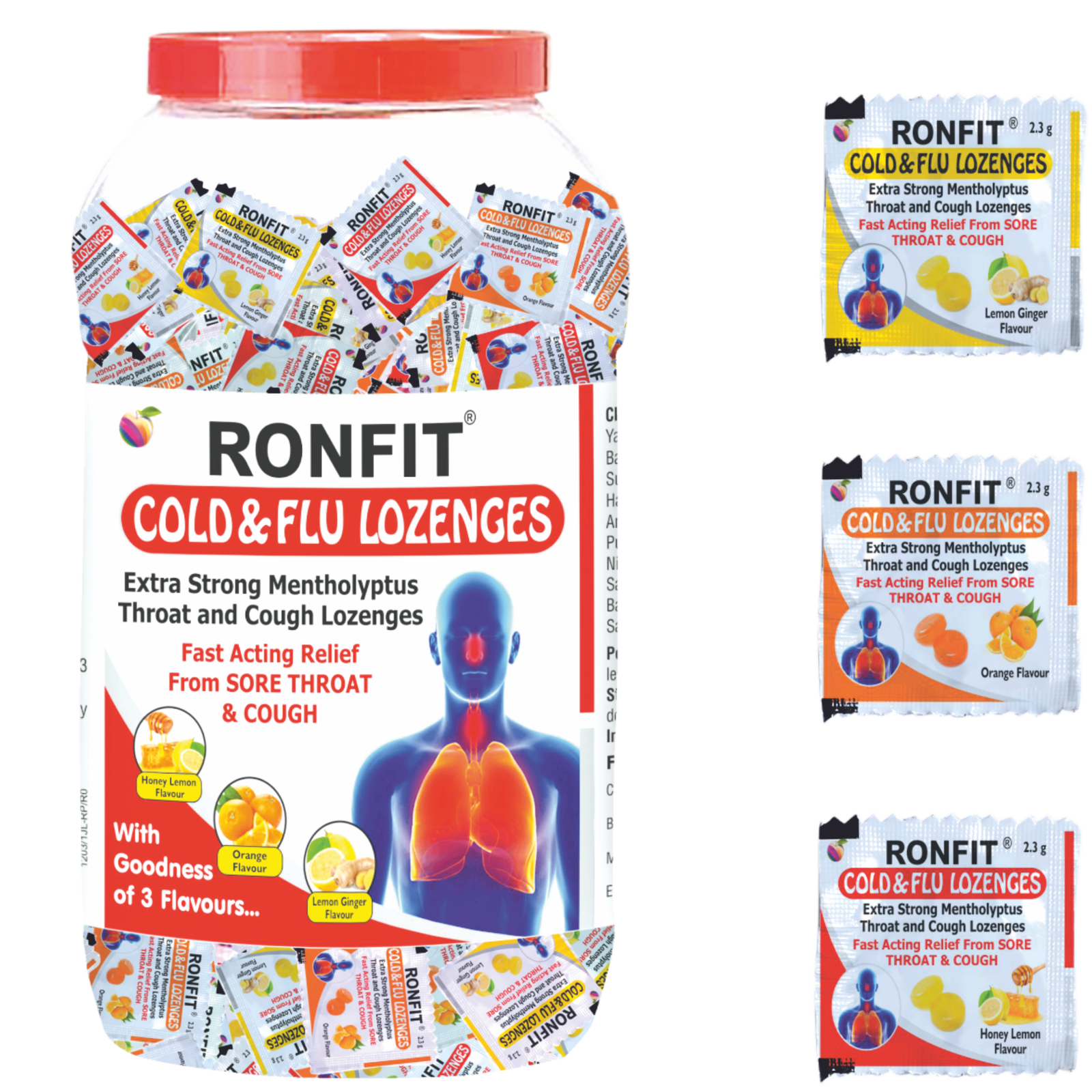
Cough and throat care is a good example of why format mix matters in healthcare distribution. Syrups and lozenges may sit within the same broader category, but they serve different merchandising roles and require different handling and sales communication.

RONFIT Cold & Flu Lozenges – Assorted Flavours

Separate syrup and lozenge roles

A distributor should decide how each format fits the intended channel. Syrups and individually wrapped lozenges create different shelf and display opportunities.

From a commercial point of view, this keeps the evaluation grounded in how the product will actually be bought, presented and supported. It also gives procurement, sales and regulatory colleagues a shared reference point instead of forcing each team to interpret the range differently.

Use product families to simplify sales conversations

Consistent naming and colour systems can help trade teams understand related syrup variants without adding new medical claims.

For international business, clarity at this stage reduces avoidable back-and-forth later. The more precisely the buyer defines the requirement, the easier it is to compare options, request the right documents and keep commercial planning aligned with the realities of the destination market.

Consider wholesale handling

Wholesalers should review case quantity, storage, pack durability and the ease of identifying products in mixed inventories.

This is especially important for a multi-category brand because one decision can affect product data, merchandising, artwork, registration and downstream sales materials. A consistent approach makes later updates easier to control across the distributor’s own systems.

Keep ingredient imagery disciplined

Flavour or ingredient references already on packaging should not be expanded into new therapeutic promises in trade visuals.

The practical goal is not to add more marketing language; it is to remove uncertainty. Buyers should be able to identify what is confirmed, what belongs to the approved product presentation and what still needs direct territory-specific discussion before a launch decision is made.

Use the enquiry to define the range

Importers and pharmacy networks can begin by listing the formats they need, target market and channel so the supplier can respond with relevant presentations.

Viewed as part of the wider buyer journey, this step helps move the conversation from general interest to a usable shortlist. That is where B2B content becomes valuable: it gives the buyer enough structure to ask better questions and gives the supplier enough context to answer them accurately.

Practical next steps for business buyers

Use the portfolio to create a shortlist, note the exact product names or categories you want to discuss, and prepare the market and channel information needed for a useful response. This creates a cleaner path from online research to a direct business conversation.

  • Identify the target market and sales channel.
  • Shortlist the relevant categories or exact products.
  • Confirm the documentation and labelling questions already known for the territory.
  • Use official Ronfit Forte / Ronak Group contact channels for the next step.

Questions business buyers often ask

Can lozenges and syrups be presented as one family?

They can sit within one cough and throat category while keeping each format and approved product information clearly differentiated.

What should wholesalers ask about?

Pack configuration, handling, documentation, availability and the products that best fit their downstream channels.

Can website imagery add new therapeutic claims?

No. Visuals should support product presentation without inventing claims beyond approved information.

Business and regulatory note: Availability, approved claims, labelling, documentation, registration requirements and commercial terms can vary by territory. International buyers should confirm market-specific requirements directly before placing an order or making regulatory or consumer-facing representations.

To continue the evaluation, explore the Ronfit Forte product portfolio, review the global business approach, or start a business partnership conversation.

Pain, Fever & Headache Products: How Buyers Compare Formats and Pack Architecture

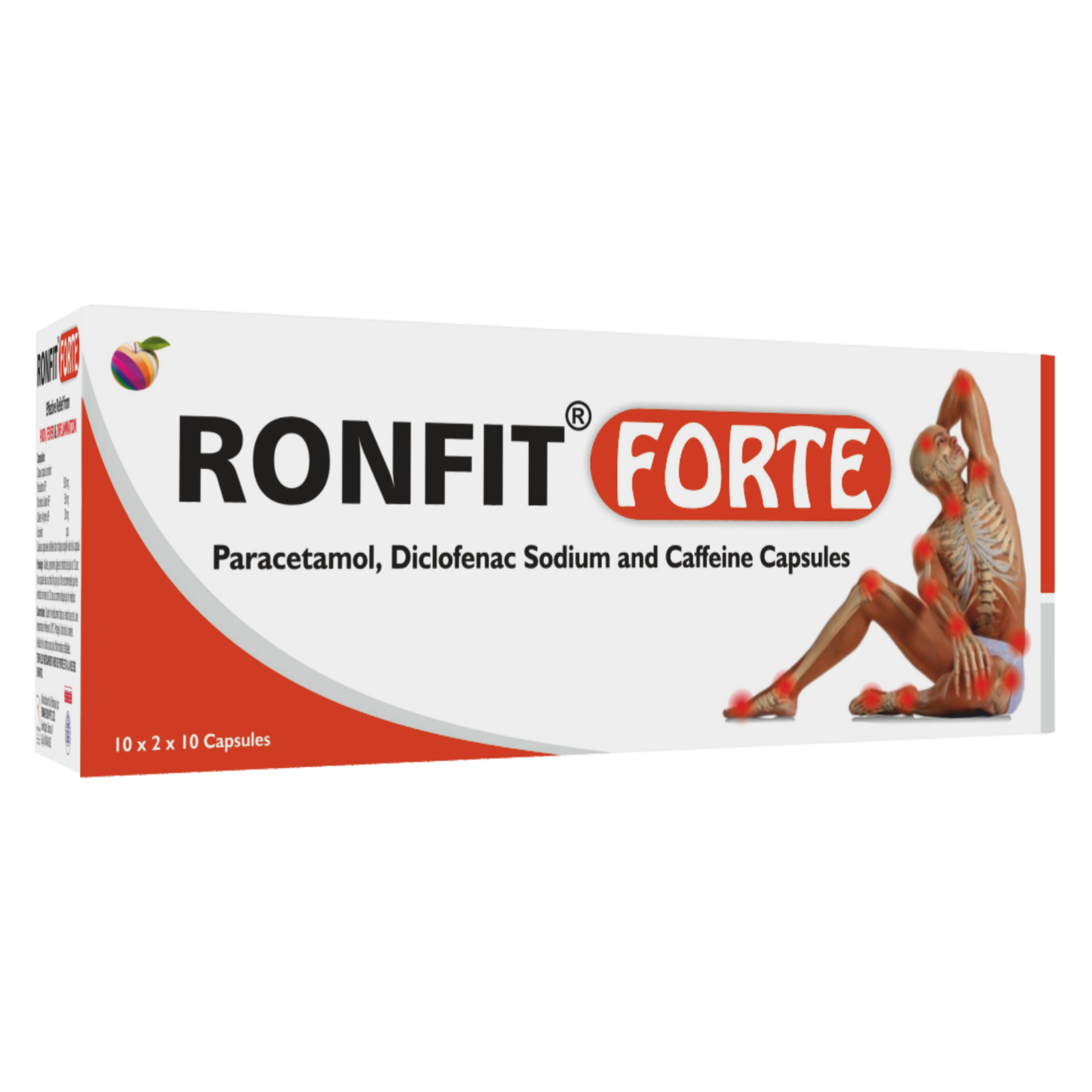
Pain, fever and headache ranges often contain multiple pack sizes, ingredient combinations and presentation formats. For B2B buyers, the important task is to compare the portfolio in a structured way and keep the commercial discussion separate from unapproved treatment claims.

RONFIT FORTE Paracetamol, Diclofenac Sodium & Caffeine Capsules

Compare the role of each presentation

Identify whether a product is a tablet, capsule, effervescent format or another presentation and determine where that format belongs in the channel.

From a commercial point of view, this keeps the evaluation grounded in how the product will actually be bought, presented and supported. It also gives procurement, sales and regulatory colleagues a shared reference point instead of forcing each team to interpret the range differently.

Make variants obvious

A strong product family should preserve master-brand consistency while making each product, pack count and variant easy to identify from catalogue data.

For international business, clarity at this stage reduces avoidable back-and-forth later. The more precisely the buyer defines the requirement, the easier it is to compare options, request the right documents and keep commercial planning aligned with the realities of the destination market.

Evaluate commercial fit without rewriting claims

Trade teams can discuss format, presentation and portfolio role without inventing new medical claims. Approved indications should come from formal product information.

This is especially important for a multi-category brand because one decision can affect product data, merchandising, artwork, registration and downstream sales materials. A consistent approach makes later updates easier to control across the distributor’s own systems.

Plan for pharmacy and wholesale use

Pharmacy networks may focus on shelf visibility while wholesalers may focus on pack configuration and inventory handling, so commercial materials should support both perspectives.

The practical goal is not to add more marketing language; it is to remove uncertainty. Buyers should be able to identify what is confirmed, what belongs to the approved product presentation and what still needs direct territory-specific discussion before a launch decision is made.

Use category-level enquiry details

Buyers can identify the pain, fever and headache category and specify the formats they want to review before discussing documentation and commercial scope.

Viewed as part of the wider buyer journey, this step helps move the conversation from general interest to a usable shortlist. That is where B2B content becomes valuable: it gives the buyer enough structure to ask better questions and gives the supplier enough context to answer them accurately.

Practical next steps for business buyers

Use the portfolio to create a shortlist, note the exact product names or categories you want to discuss, and prepare the market and channel information needed for a useful response. This creates a cleaner path from online research to a direct business conversation.

  • Identify the target market and sales channel.
  • Shortlist the relevant categories or exact products.
  • Confirm the documentation and labelling questions already known for the territory.
  • Use official Ronfit Forte / Ronak Group contact channels for the next step.

Questions business buyers often ask

Should distributors compare products by claims alone?

No. Format, pack architecture, documentation and channel fit are also important.

Why do pack counts matter in B2B buying?

They affect inventory planning, ordering and channel presentation.

Can a distributor select only part of the category?

Yes. A focused assortment can be discussed and expanded later if appropriate.

Business and regulatory note: Availability, approved claims, labelling, documentation, registration requirements and commercial terms can vary by territory. International buyers should confirm market-specific requirements directly before placing an order or making regulatory or consumer-facing representations.

To continue the evaluation, explore the Ronfit Forte product portfolio, review the global business approach, or start a business partnership conversation.
Topical Pain Relief Products for Distributors: Gels, Sprays, Balms and Range Planning

Topical pain relief is a format-driven category. Jars, gels, sprays and balms may sit under one commercial umbrella, but they behave differently on shelf and in distributor catalogues.

RONFIT FORTE ICE COLD Gel with Menthol 227 g

Start with format architecture

Group jars, gels, sprays and balms clearly so buyers can compare the role of each format without relying on exaggerated pain imagery.

From a commercial point of view, this keeps the evaluation grounded in how the product will actually be bought, presented and supported. It also gives procurement, sales and regulatory colleagues a shared reference point instead of forcing each team to interpret the range differently.

Preserve approved variant colours

Where jar variants use distinct colours, those colours should remain unchanged because they support recognition and accurate product identification.

For international business, clarity at this stage reduces avoidable back-and-forth later. The more precisely the buyer defines the requirement, the easier it is to compare options, request the right documents and keep commercial planning aligned with the realities of the destination market.

Merchandising should keep products grounded

Clean podiums and premium backgrounds can make topical products feel more valuable without placing literal ice, pain points or other effects directly on the pack.

This is especially important for a multi-category brand because one decision can affect product data, merchandising, artwork, registration and downstream sales materials. A consistent approach makes later updates easier to control across the distributor’s own systems.

Ask about pack and logistics details

Sprays, jars and cartons may have different case configurations, storage considerations and handling requirements, which wholesalers should review early.

The practical goal is not to add more marketing language; it is to remove uncertainty. Buyers should be able to identify what is confirmed, what belongs to the approved product presentation and what still needs direct territory-specific discussion before a launch decision is made.

Build a practical first assortment

A distributor may start with a hero jar plus supporting formats or review the broader topical family, depending on market fit and documentation.

Viewed as part of the wider buyer journey, this step helps move the conversation from general interest to a usable shortlist. That is where B2B content becomes valuable: it gives the buyer enough structure to ask better questions and gives the supplier enough context to answer them accurately.

Practical next steps for business buyers

Use the portfolio to create a shortlist, note the exact product names or categories you want to discuss, and prepare the market and channel information needed for a useful response. This creates a cleaner path from online research to a direct business conversation.

  • Identify the target market and sales channel.
  • Shortlist the relevant categories or exact products.
  • Confirm the documentation and labelling questions already known for the territory.
  • Use official Ronfit Forte / Ronak Group contact channels for the next step.

Questions business buyers often ask

Should topical product colours be standardised by the distributor?

No. Approved packaging and jar colours should be preserved exactly.

Can different topical formats be presented in one category?

Yes, while keeping clear format differentiation.

What should product photography avoid?

Avoid overlays or effects that obscure labels, change colours or imply claims beyond the packaging.

Business and regulatory note: Availability, approved claims, labelling, documentation, registration requirements and commercial terms can vary by territory. International buyers should confirm market-specific requirements directly before placing an order or making regulatory or consumer-facing representations.

To continue the evaluation, explore the Ronfit Forte product portfolio, review the global business approach, or start a business partnership conversation.

Skin & Dermatology Products for Distributors: Building a Focused Daily-Care Range

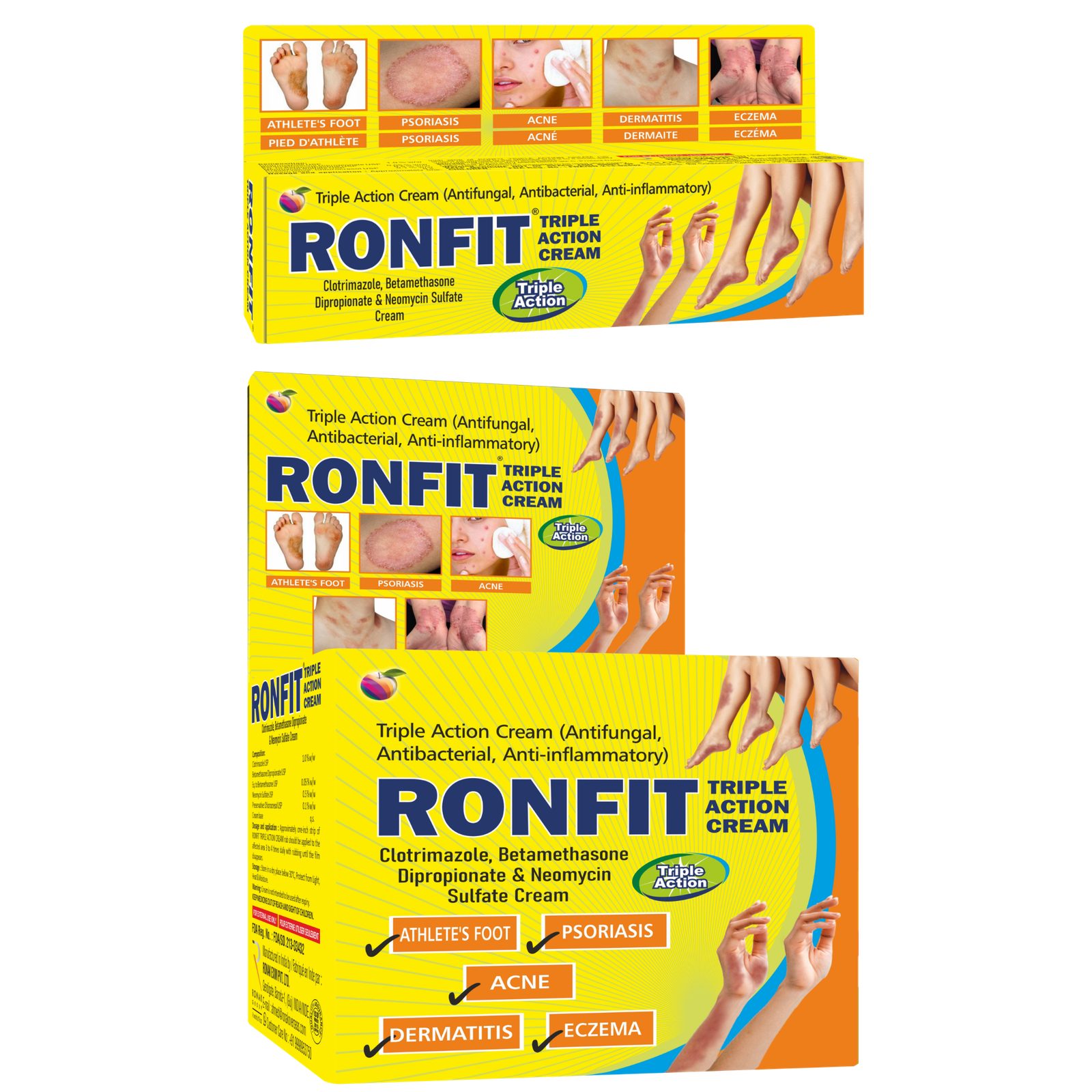
Skin and dermatology ranges can become visually cluttered when trade marketing repeats condition photographs or turns packaging claims into oversized scene elements. A better B2B approach keeps the approved product pack central and uses clean category presentation.

RONFIT Triple Action Cream

Keep the product pack as the primary source

If condition photographs or claim language already appear on approved packaging, trade visuals do not need to recreate them elsewhere.

From a commercial point of view, this keeps the evaluation grounded in how the product will actually be bought, presented and supported. It also gives procurement, sales and regulatory colleagues a shared reference point instead of forcing each team to interpret the range differently.

Compare formats and handling

Cream cartons and dusting powder bottles have different shelf footprints, storage and merchandising requirements.

For international business, clarity at this stage reduces avoidable back-and-forth later. The more precisely the buyer defines the requirement, the easier it is to compare options, request the right documents and keep commercial planning aligned with the realities of the destination market.

Use category colour without redesigning the product

A category banner can take inspiration from the product palette while leaving the carton, bottle, label, typography and artwork unchanged.

This is especially important for a multi-category brand because one decision can affect product data, merchandising, artwork, registration and downstream sales materials. A consistent approach makes later updates easier to control across the distributor’s own systems.

Documentation should be product-specific

Skin and dermatology products may follow different regulatory classifications depending on composition and market, so buyers should confirm each SKU separately.

The practical goal is not to add more marketing language; it is to remove uncertainty. Buyers should be able to identify what is confirmed, what belongs to the approved product presentation and what still needs direct territory-specific discussion before a launch decision is made.

A focused range is easier to support

Distributors can begin with the formats most relevant to their pharmacy or retail network and expand as the category is established.

Viewed as part of the wider buyer journey, this step helps move the conversation from general interest to a usable shortlist. That is where B2B content becomes valuable: it gives the buyer enough structure to ask better questions and gives the supplier enough context to answer them accurately.

Practical next steps for business buyers

Use the portfolio to create a shortlist, note the exact product names or categories you want to discuss, and prepare the market and channel information needed for a useful response. This creates a cleaner path from online research to a direct business conversation.

  • Identify the target market and sales channel.
  • Shortlist the relevant categories or exact products.
  • Confirm the documentation and labelling questions already known for the territory.
  • Use official Ronfit Forte / Ronak Group contact channels for the next step.

Questions business buyers often ask

Should condition photos from packaging be enlarged in category banners?

No. Keeping those images confined to approved packaging avoids creating additional visual claims.

Can cream and dusting powder products share a category?

Yes, provided each format is clearly identified and the product information remains accurate.

Are regulatory classifications identical in every country?

No. Product classification and registration can vary by territory.

Business and regulatory note: Availability, approved claims, labelling, documentation, registration requirements and commercial terms can vary by territory. International buyers should confirm market-specific requirements directly before placing an order or making regulatory or consumer-facing representations.

To continue the evaluation, explore the Ronfit Forte product portfolio, review the global business approach, or start a business partnership conversation.
Infant Nutrition Portfolio for Distributors: Stage-Based Range Planning

Infant nutrition requires a particularly careful B2B approach because product classification, labelling, marketing and registration can be highly regulated. Distributors should first understand the stage architecture of the range and then confirm exactly what is permitted in the intended market.

Infant Nutrition Portfolio for Distributors: Stage-Based Range Planning

Why stage architecture matters

Stage-based presentation helps buyers distinguish products intended for different feeding stages and plan the range as a sequence rather than unrelated tins.

From a commercial point of view, this keeps the evaluation grounded in how the product will actually be bought, presented and supported. It also gives procurement, sales and regulatory colleagues a shared reference point instead of forcing each team to interpret the range differently.

Evaluate pack and shelf presentation

A nutrition tin has different storage, display and logistics considerations from tablets or syrups. Buyers should review tin size, stage visibility, shelf sequencing and approved imagery.

For international business, clarity at this stage reduces avoidable back-and-forth later. The more precisely the buyer defines the requirement, the easier it is to compare options, request the right documents and keep commercial planning aligned with the realities of the destination market.

Regulatory and marketing controls come first

Infant nutrition is subject to strict rules in many jurisdictions. Buyers should identify national requirements and, where relevant, the WHO International Code of Marketing of Breast-milk Substitutes.

This is especially important for a multi-category brand because one decision can affect product data, merchandising, artwork, registration and downstream sales materials. A consistent approach makes later updates easier to control across the distributor’s own systems.

Plan documentation before launch timing

The right timeline starts with a documentation map covering product information, certificates, labels, registration forms and translations required locally.

The practical goal is not to add more marketing language; it is to remove uncertainty. Buyers should be able to identify what is confirmed, what belongs to the approved product presentation and what still needs direct territory-specific discussion before a launch decision is made.

Use a phased distributor approach

A buyer may begin with the stages that fit its channel plan and expand later, while keeping stage differentiation and market communication compliant.

Viewed as part of the wider buyer journey, this step helps move the conversation from general interest to a usable shortlist. That is where B2B content becomes valuable: it gives the buyer enough structure to ask better questions and gives the supplier enough context to answer them accurately.

Practical next steps for business buyers

Use the portfolio to create a shortlist, note the exact product names or categories you want to discuss, and prepare the market and channel information needed for a useful response. This creates a cleaner path from online research to a direct business conversation.

  • Identify the target market and sales channel.
  • Shortlist the relevant categories or exact products.
  • Confirm the documentation and labelling questions already known for the territory.
  • Use official Ronfit Forte / Ronak Group contact channels for the next step.

Questions business buyers often ask

Can infant nutrition marketing rules vary by country?

Yes. Labelling, promotion and registration rules can vary significantly and should be reviewed for each target market.

Should distributors change stage wording themselves?

No. Packaging and product descriptions should remain aligned with approved and territory-compliant information.

What should be reviewed first: price or registration?

Commercial terms matter, but feasibility is clearer when regulatory and documentation requirements are understood early.

Business and regulatory note: Availability, approved claims, labelling, documentation, registration requirements and commercial terms can vary by territory. International buyers should confirm market-specific requirements directly before placing an order or making regulatory or consumer-facing representations.

To continue the evaluation, explore the Ronfit Forte product portfolio, review the global business approach, or start a business partnership conversation.

Paediatric Care Products for Distributors: Building a Clear Shelf Architecture

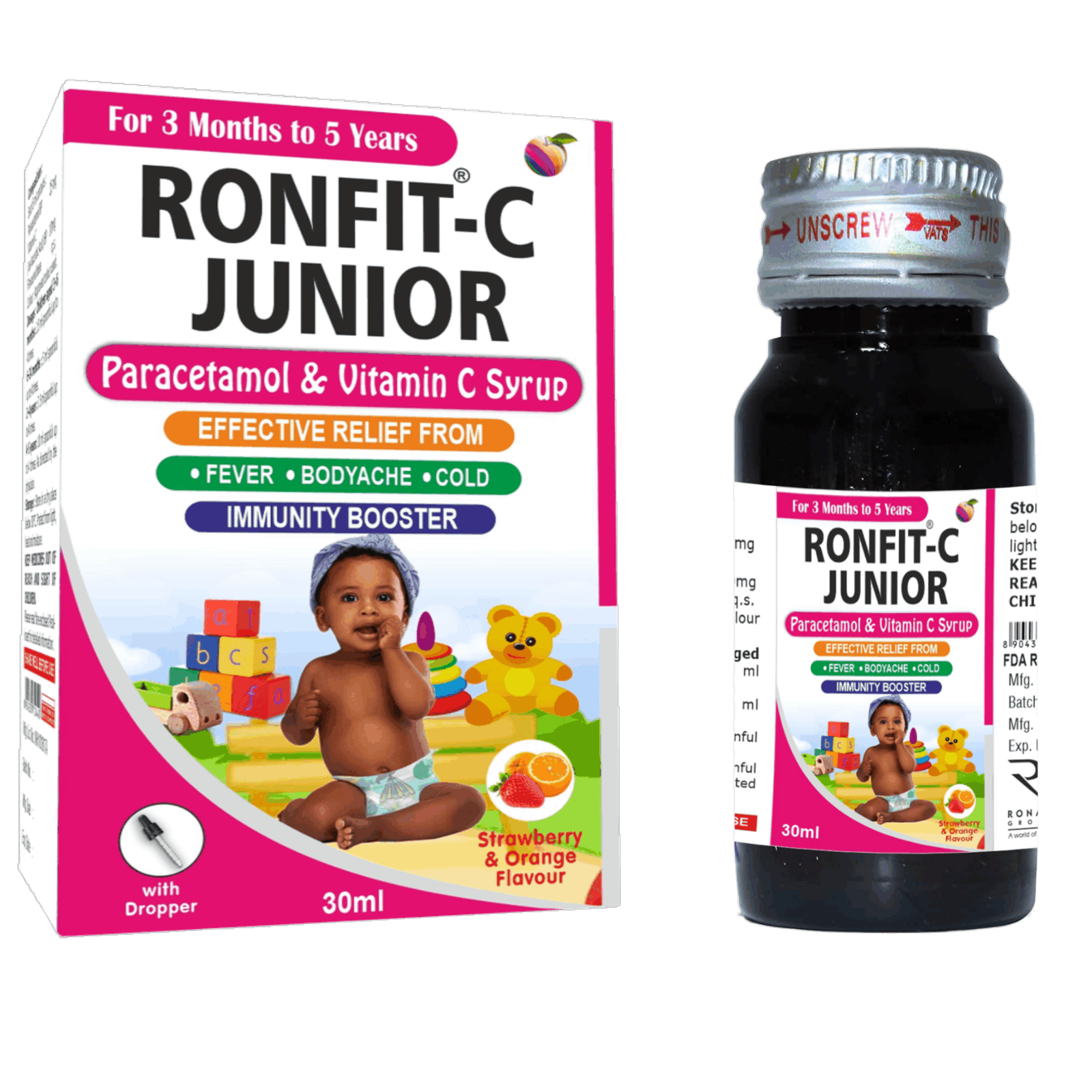
Paediatric healthcare products need clear differentiation. Buyers, pharmacists and sales teams should be able to tell one presentation from another without relying on memory or fine print.

RONFIT-C Junior Paracetamol & Vitamin C Syrup 30 ml

Clarity starts with naming

Consistent product naming helps trade buyers distinguish variants and formats, especially when several syrups or age-oriented presentations sit within the same family.

From a commercial point of view, this keeps the evaluation grounded in how the product will actually be bought, presented and supported. It also gives procurement, sales and regulatory colleagues a shared reference point instead of forcing each team to interpret the range differently.

Age and pack presentation must remain controlled

Where age ranges or other instructions appear on approved packaging, distributors should preserve that information exactly and avoid creating new claims.

For international business, clarity at this stage reduces avoidable back-and-forth later. The more precisely the buyer defines the requirement, the easier it is to compare options, request the right documents and keep commercial planning aligned with the realities of the destination market.

Format matters to channel planning

Bottle size, carton size and dispensing presentation affect stocking, display and sales explanation, so pharmacy and wholesale buyers may evaluate the same product differently.

This is especially important for a multi-category brand because one decision can affect product data, merchandising, artwork, registration and downstream sales materials. A consistent approach makes later updates easier to control across the distributor’s own systems.

Build category materials for the buyer

A distributor-facing category page should show related products together, use clear pack images and avoid unnecessary medical imagery outside the packaging.

The practical goal is not to add more marketing language; it is to remove uncertainty. Buyers should be able to identify what is confirmed, what belongs to the approved product presentation and what still needs direct territory-specific discussion before a launch decision is made.

Move from category review to market discussion

After identifying the relevant products, buyers should confirm documentation, availability and any market-specific labelling requirements.

Viewed as part of the wider buyer journey, this step helps move the conversation from general interest to a usable shortlist. That is where B2B content becomes valuable: it gives the buyer enough structure to ask better questions and gives the supplier enough context to answer them accurately.

Practical next steps for business buyers

Use the portfolio to create a shortlist, note the exact product names or categories you want to discuss, and prepare the market and channel information needed for a useful response. This creates a cleaner path from online research to a direct business conversation.

  • Identify the target market and sales channel.
  • Shortlist the relevant categories or exact products.
  • Confirm the documentation and labelling questions already known for the territory.
  • Use official Ronfit Forte / Ronak Group contact channels for the next step.

Questions business buyers often ask

Why is pack differentiation important in paediatric ranges?

It helps trade teams distinguish products and reduces confusion in catalogue, shelf and sales presentation contexts.

Can a distributor create new paediatric claims?

Only claims permitted by the applicable approval and market rules should be used.

What should a buyer include in a paediatric enquiry?

Market, channel, products of interest and the documentation or registration questions already identified.

Business and regulatory note: Availability, approved claims, labelling, documentation, registration requirements and commercial terms can vary by territory. International buyers should confirm market-specific requirements directly before placing an order or making regulatory or consumer-facing representations.

To continue the evaluation, explore the Ronfit Forte product portfolio, review the global business approach, or start a business partnership conversation.