Ronfit Forte logo

Business Enquiry Checklist for Healthcare Importers and Wholesalers

A good business enquiry saves time on both sides. It does not need to be long, but it should provide enough context for the supplier to understand the opportunity.

Business Enquiry Checklist for Healthcare Importers and Wholesalers

State your market

Tell the supplier the country or territory where the products will be evaluated because market context affects registration, labelling and availability.

From a commercial point of view, this keeps the evaluation grounded in how the product will actually be bought, presented and supported. It also gives procurement, sales and regulatory colleagues a shared reference point instead of forcing each team to interpret the range differently.

Explain your business role and channel

Identify whether you are an importer, distributor, wholesaler, pharmacy network, retail chain or another healthcare business.

For international business, clarity at this stage reduces avoidable back-and-forth later. The more precisely the buyer defines the requirement, the easier it is to compare options, request the right documents and keep commercial planning aligned with the realities of the destination market.

Name categories or products of interest

A category shortlist helps the supplier respond with the most relevant information and is more useful than a generic request for all products.

This is especially important for a multi-category brand because one decision can affect product data, merchandising, artwork, registration and downstream sales materials. A consistent approach makes later updates easier to control across the distributor’s own systems.

Share documentation questions

If your regulatory team already knows which documents are required, include that list to reduce back-and-forth.

The practical goal is not to add more marketing language; it is to remove uncertainty. Buyers should be able to identify what is confirmed, what belongs to the approved product presentation and what still needs direct territory-specific discussion before a launch decision is made.

Give a named contact and next step

Include the person responsible for the enquiry and a preferred way to continue the conversation.

Viewed as part of the wider buyer journey, this step helps move the conversation from general interest to a usable shortlist. That is where B2B content becomes valuable: it gives the buyer enough structure to ask better questions and gives the supplier enough context to answer them accurately.

Practical next steps for business buyers

Use the portfolio to create a shortlist, note the exact product names or categories you want to discuss, and prepare the market and channel information needed for a useful response. This creates a cleaner path from online research to a direct business conversation.

  • Identify the target market and sales channel.
  • Shortlist the relevant categories or exact products.
  • Confirm the documentation and labelling questions already known for the territory.
  • Use official Ronfit Forte / Ronak Group contact channels for the next step.

Questions business buyers often ask

Do I need to include order quantity immediately?

Only if it is already known. Market, channel and product interest are often more important at the start.

Should I ask for price before documents?

You can discuss commercial terms, but understanding product and documentation fit first usually makes pricing more useful.

Can I enquire about several categories at once?

Yes. List the priority categories so the supplier can organise the response.

Business and regulatory note: Availability, approved claims, labelling, documentation, registration requirements and commercial terms can vary by territory. International buyers should confirm market-specific requirements directly before placing an order or making regulatory or consumer-facing representations.

To continue the evaluation, explore the Ronfit Forte product portfolio, review the global business approach, or start a business partnership conversation.
Ronfit Forte Healthcare Products for Distributors: A Portfolio Overview

For an international distributor, a healthcare brand is easier to evaluate when the range is organised around recognisable categories rather than presented as a disconnected list of SKUs. Ronfit Forte is positioned for business-to-business conversations, with product families spanning nutrition, paediatric care, cold and flu, cough and throat, pain management, topical care and skin care.

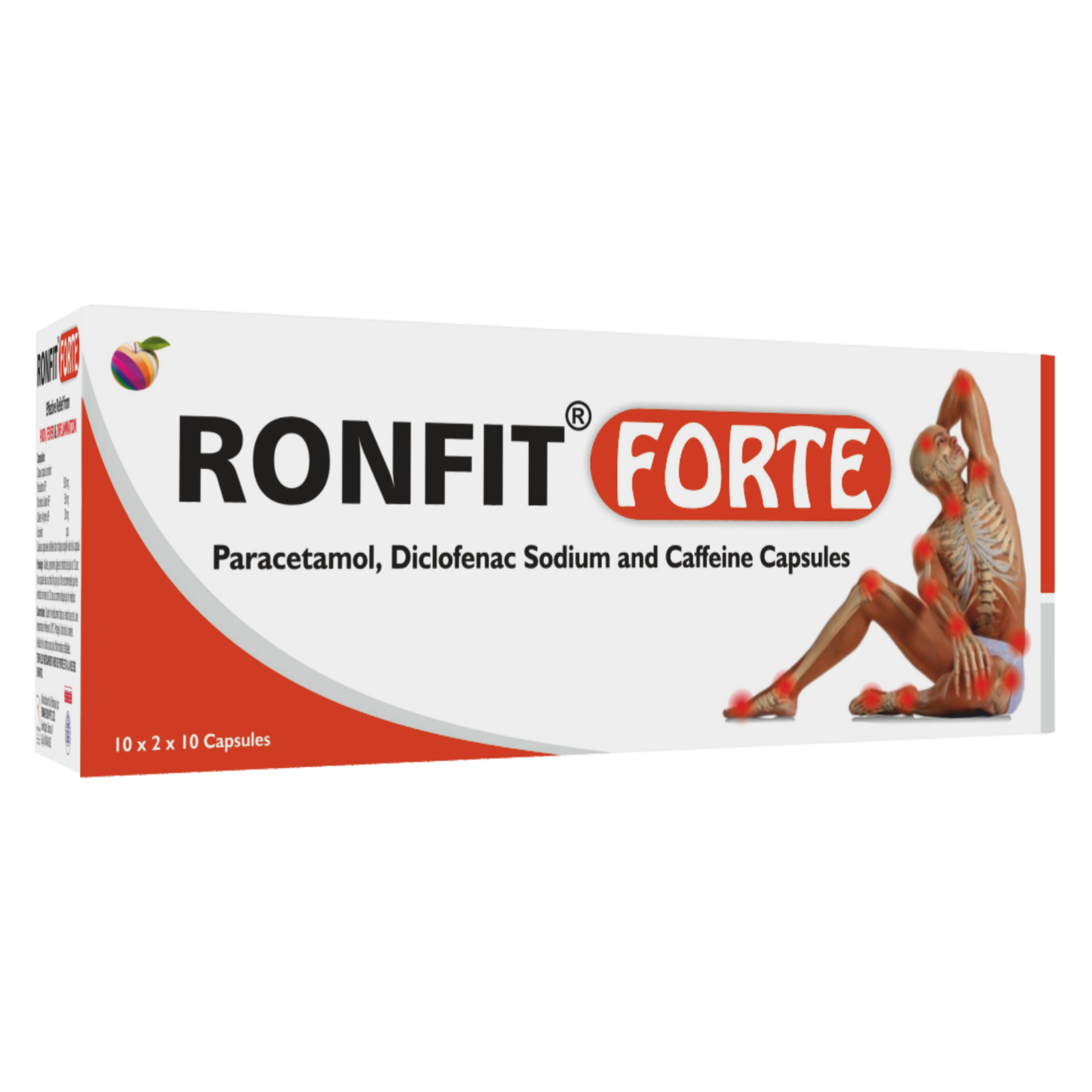
RONFIT FORTE Paracetamol, Diclofenac Sodium & Caffeine Capsules

A category-led portfolio is easier to buy

Distributors typically think in category blocks: what belongs in pharmacy, what fits modern trade, what complements an existing range and what can be presented as a coherent shelf story. A category-led portfolio makes it easier for purchasing, sales and merchandising teams to evaluate the offer together.

From a commercial point of view, this keeps the evaluation grounded in how the product will actually be bought, presented and supported. It also gives procurement, sales and regulatory colleagues a shared reference point instead of forcing each team to interpret the range differently.

What international buyers should review first

The first review should focus on fit rather than volume. Buyers should consider category relevance, pack format, shelf presentation, territory-specific documentation needs, product imagery and how easily the range can be explained to downstream customers.

For international business, clarity at this stage reduces avoidable back-and-forth later. The more precisely the buyer defines the requirement, the easier it is to compare options, request the right documents and keep commercial planning aligned with the realities of the destination market.

Why portfolio breadth can matter

A broader portfolio can reduce the number of supplier relationships a distributor manages, but breadth only creates value when the range remains understandable. Buyers can begin with one or two relevant categories and expand after registration, merchandising and sales processes are working smoothly.

This is especially important for a multi-category brand because one decision can affect product data, merchandising, artwork, registration and downstream sales materials. A consistent approach makes later updates easier to control across the distributor’s own systems.

Keep B2B presentation separate from consumer claims

A distributor website should make the brand easy to understand without adding unsupported medical claims, market-presence statistics or territory-specific promises. Product information should remain aligned with approved packaging and market requirements.

The practical goal is not to add more marketing language; it is to remove uncertainty. Buyers should be able to identify what is confirmed, what belongs to the approved product presentation and what still needs direct territory-specific discussion before a launch decision is made.

Move from review to a qualified enquiry

A useful enquiry includes the market, channel, business role and categories of interest. That gives the supplier enough context to respond with product, documentation and commercial information that is relevant to the buyer.

Viewed as part of the wider buyer journey, this step helps move the conversation from general interest to a usable shortlist. That is where B2B content becomes valuable: it gives the buyer enough structure to ask better questions and gives the supplier enough context to answer them accurately.

Practical next steps for business buyers

Use the portfolio to create a shortlist, note the exact product names or categories you want to discuss, and prepare the market and channel information needed for a useful response. This creates a cleaner path from online research to a direct business conversation.

  • Identify the target market and sales channel.
  • Shortlist the relevant categories or exact products.
  • Confirm the documentation and labelling questions already known for the territory.
  • Use official Ronfit Forte / Ronak Group contact channels for the next step.

Questions business buyers often ask

Is Ronfit Forte designed for direct consumer checkout?

The website is positioned as a B2B showcase and enquiry platform rather than a consumer e-commerce store.

Can a distributor discuss only one category?

Yes. A buyer can begin with the categories that fit its channel and discuss wider portfolio opportunities later.

Are market-specific approvals the same everywhere?

No. Registration, labelling, approved claims and documentation requirements vary by territory and must be confirmed for the target market.

Business and regulatory note: Availability, approved claims, labelling, documentation, registration requirements and commercial terms can vary by territory. International buyers should confirm market-specific requirements directly before placing an order or making regulatory or consumer-facing representations.

To continue the evaluation, explore the Ronfit Forte product portfolio, review the global business approach, or start a business partnership conversation.